
ARENAS consortium member, Gwenaelle Bauvois, presented some of her latest work on Femonationalism at the recent HEPP – Helsinki Hub on Emotions, Populism and Polarisation conference hosted by the University of Helsinki.
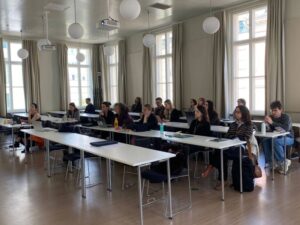
Her paper, ” Instrumentalising Feminism: Gendered Logics and Femonationalism in Collectif Némésis examines how the French identitarian group Collectif Némésis strategically appropriates and reframes feminist activism to construct an exclusionary political project. It analyses how Némésis directly repurposes the core tactical repertoire of contemporary feminism, including provocative happenings, feminist collages, and infiltration of demonstrations, to advance a xenophobic and nationalist agenda. Through a critical discourse and content analysis of their public actions, media interventions, and promotional materials, we demonstrate that the group’s xenophobic and nationalist agenda is fundamentally articulated through a gendered logic.
 The study shows how Némésis instrumentalises genuine concerns about violence against women to fuel a femonationalist discourse, systematically linking sexual violence and femicides to immigrant and Muslim men. By presenting a modern, media-savvy, and “fun” feminism, they craft a potent counter-narrative to left-wing feminism, making exclusionary politics palatable and accessible, particularly to a younger generation. This paper contends that the case of Némésis exemplifies a broader trend in far-right mobilisation, where the co-option of feminist language and symbols serves as a powerful mechanism to draw gendered boundaries, legitimise xenophobia, and imagine a homogenous national community under threat.
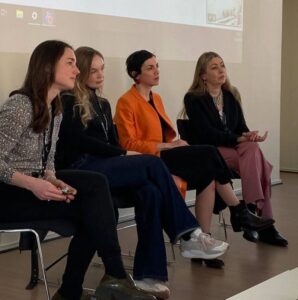
She was also part of the panel “Gendered Boundaries,” sharing the conversation with an inspiring all-female panel exploring the intersections of gender, nationalism, populism, media, and political imaginaries. This panel examined how contemporary far-right and masculinist movements across diverse contexts mobilise gendered and sexualized narratives to construct exclusionary visions of community, nation, and belonging. While far-right phenomena are often analysed in terms of race or nationalism, their discursive power also relies deeply on gendered logics – from appeals to “traditional family values” and the protection of women and children, to anxieties about emasculation, demographic decline, and feminist or queer “threats” to social order. Bringing together interdisciplinary perspectives from political science, gender studies, and media studies, the panel explores how gender functions both as a symbolic resource and as a regulatory mechanism in far-right discourse and organising. Papers investigate, among other themes, the articulation of masculinity in online subcultures; the use of anti-gender and anti-LGBTQ+ rhetoric in nationalist mobilisation; and the ways feminist and women’s rights language is co-opted to legitimate xenophobia and Islamophobia. Together, these contributions highlight that gender is not a secondary or derivative aspect of the far-right movements, but a central organising principle through which exclusionary boundaries are imagined, justified, and enforced.