
ARENAS recently shared its findings on how extremist narratives spread with digital marketing students, young content creators and academics at a workshop as part of the EU-funded Memory Makers project.
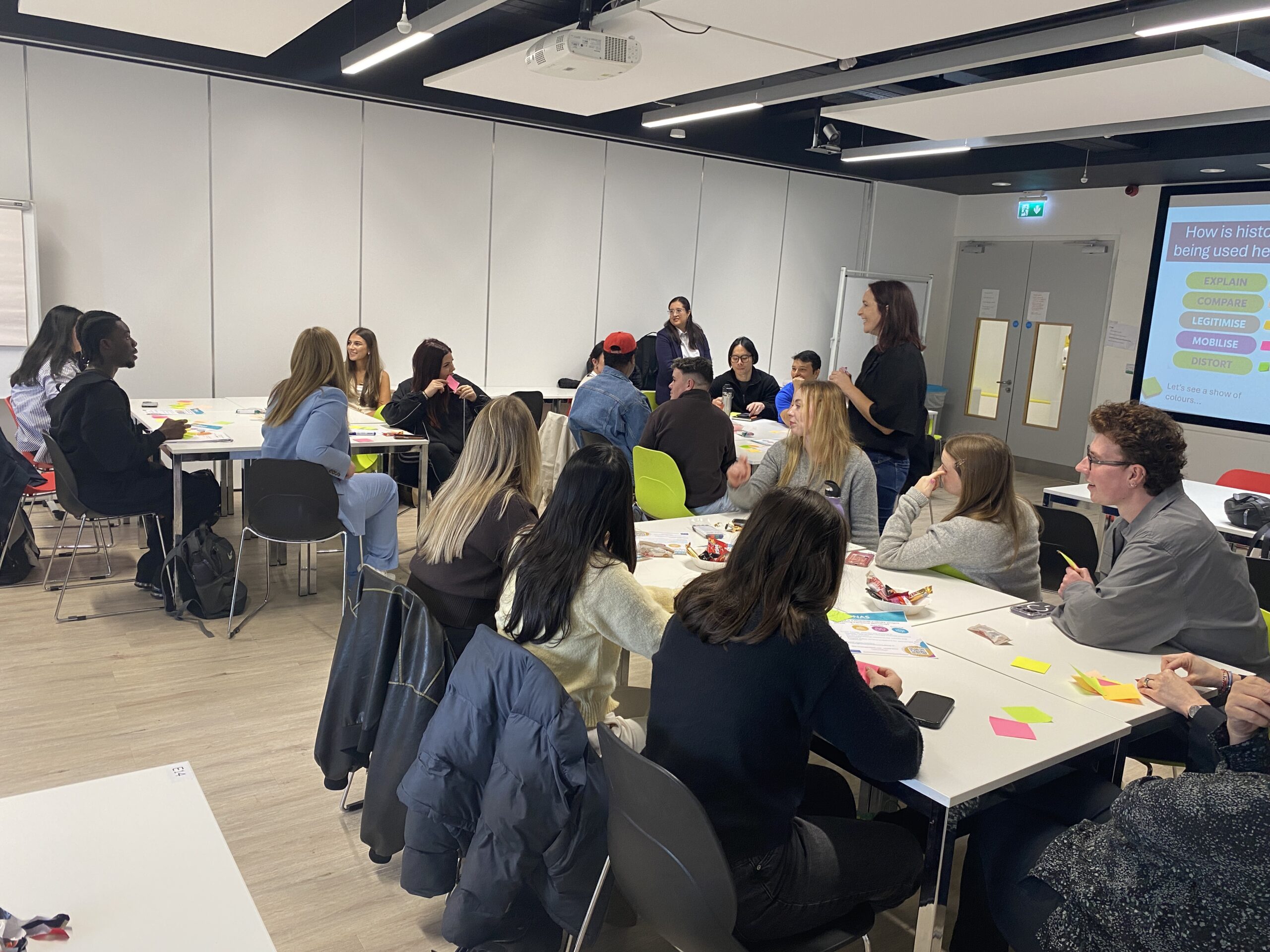
What happens when the thing you are marketing is an idea, a cause or a version of history? That question sat at the heart of Hack the Feed, a workshop held as part of the Memory Makers project, which involves young people in how history is remembered. The workshop brought together digital marketing students from Technical University of the Shannon (TUS) Athlone, Ireland, social media influencers, and staff from TUS Athlone, University of Galway, and Jagiellonian University in Krakow.
Denise Callan, ARENAS Work Package Leader for Communications, Dissemination and Exploitation at Momentum, the Irish partner in the project, led the session “How Stories Spread Across Your Feed”. She aimed to introduce the academic research carried out by ARENAS to the next generation of media makers and academics lecturing in both digital marketing and international and political studies.
Drawing on the ARENAS published research, Denise explained the difference between a claim, a frame, a narrative and an ideology. She described the recognisable “skeleton” of many extremist narratives, how repetition and variation help them stick, and how words such as “remigration” can drift from the fringe into everyday language. She also showed how narratives attach to identity and grievance, dividing the world into a virtuous “us” and a dangerous “them”, and how platform incentives such as the “misinformation premium” and the “outrage economy” can help them travel further.
Young people and academics are two of ARENAS’s priority audiences. Hack the Feed offered a chance to reach both at once, in a setting where research met practice. After a morning of presentations, the afternoon session provided the students with an opportunity to apply what they had learned by analysing real-world social media posts and then creating responses to them on behalf of various organisations, including media personalities, educational establishments and NGOs.
Participants left the workshop with a portable checklist and a set of ARENAS resources they can use straight away, including the Learning Platform, the Glossary of Extremism, the Extreme Europe podcast, the Going Extreme exhibition, and the project’s e-zine and blog. Attendees were also encouraged to use these in class projects and assignments.
For an audience of future content creators, the practical message was clear: interrogate the source, explain the story, don’t simply amplify it.