The words we choose, the framings we repeat, and the subtle rhetorical patterns we absorb without noticing all shape how ideas spread, including extremist ones. Our use of language is rarely neutral, and this is what Béatrice Fracchiolla explored in her research. It also sits at the heart of what the ARENAS project is working to understand. How Far Right ideas take root in language.
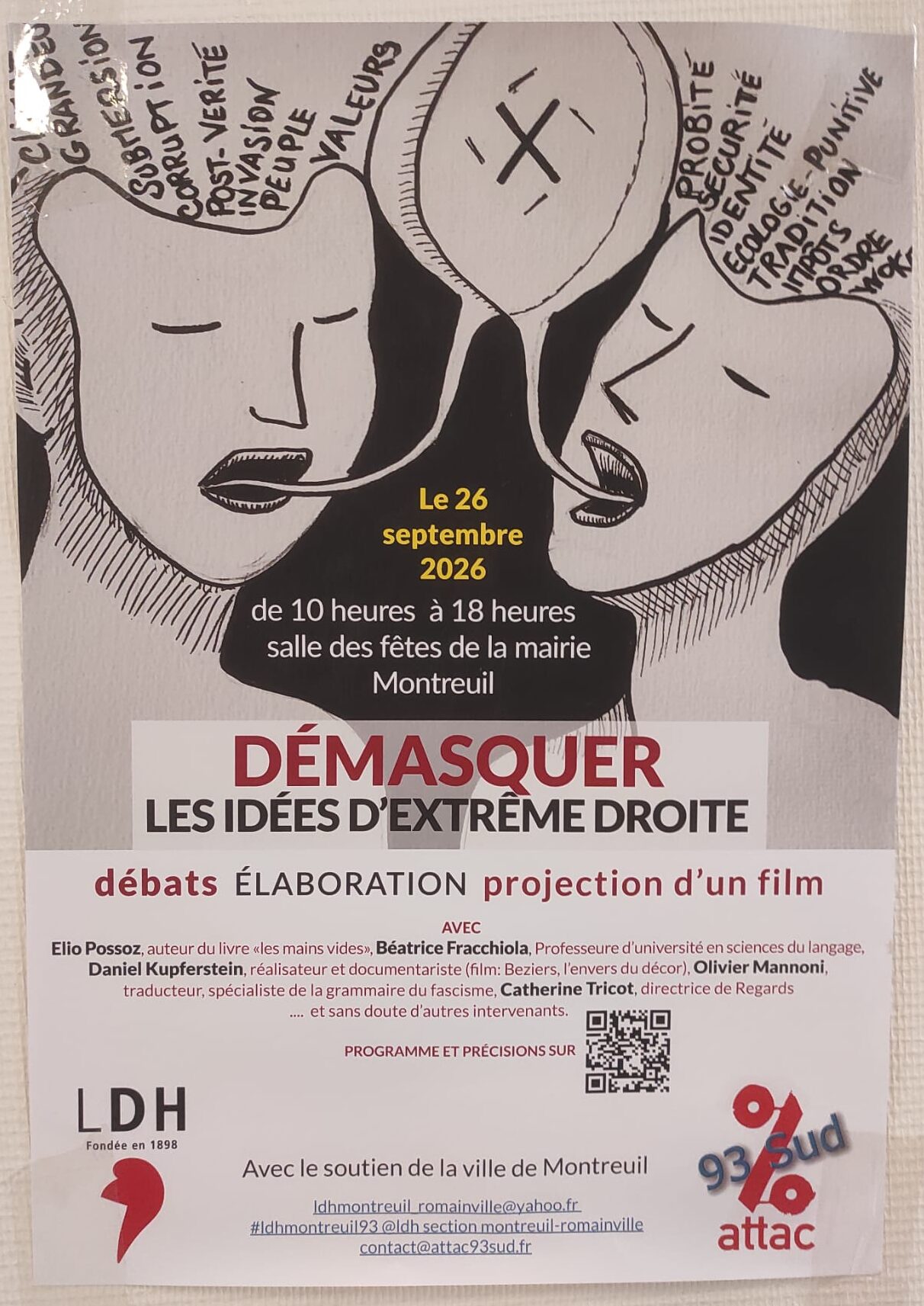
On 26 September 2026, Fracchiolla, University Professor in Language Sciences, brought that expertise to a public audience at “Unmasking Far-Right Ideas,” a full day of debate, testimony, and film hosted at the Montreuil town hall banquet hall with the support of the Ligue des droits de l’Homme (LDH).
Her talk, “How Far-Right Ideas Take Root in Language,” opened the morning session with more than 100 audience members and set the tone for a day that also featured author Elio Passoz, documentarian Daniel Kupferstein, translator and fascism-grammar specialist Olivier Mannoni, and Regards director Catherine Tricot.
Why language matters to extremism research
Extremist narratives rarely announce themselves outright. They work through in-group language that feels ordinary to those inside it: shared metaphors, coded key words, and argumentation patterns that quietly normalise an us-versus-them worldview. Recognising these patterns, understanding how they take hold, and tracing how they move from the margins into mainstream discourse is exactly the kind of linguistic and discourse analysis that underpins ARENAS’s work on extremist narratives across Europe.
Fracchiolla’s contribution to this event reflected that same commitment: making rigorous language research legible and useful to the citizens, educators, and civil society actors who encounter these narratives in daily life. Her presentation can be accessed at this link.